Anitta is crowned by Eloína, a pioneering transvestite who made history at Carnival
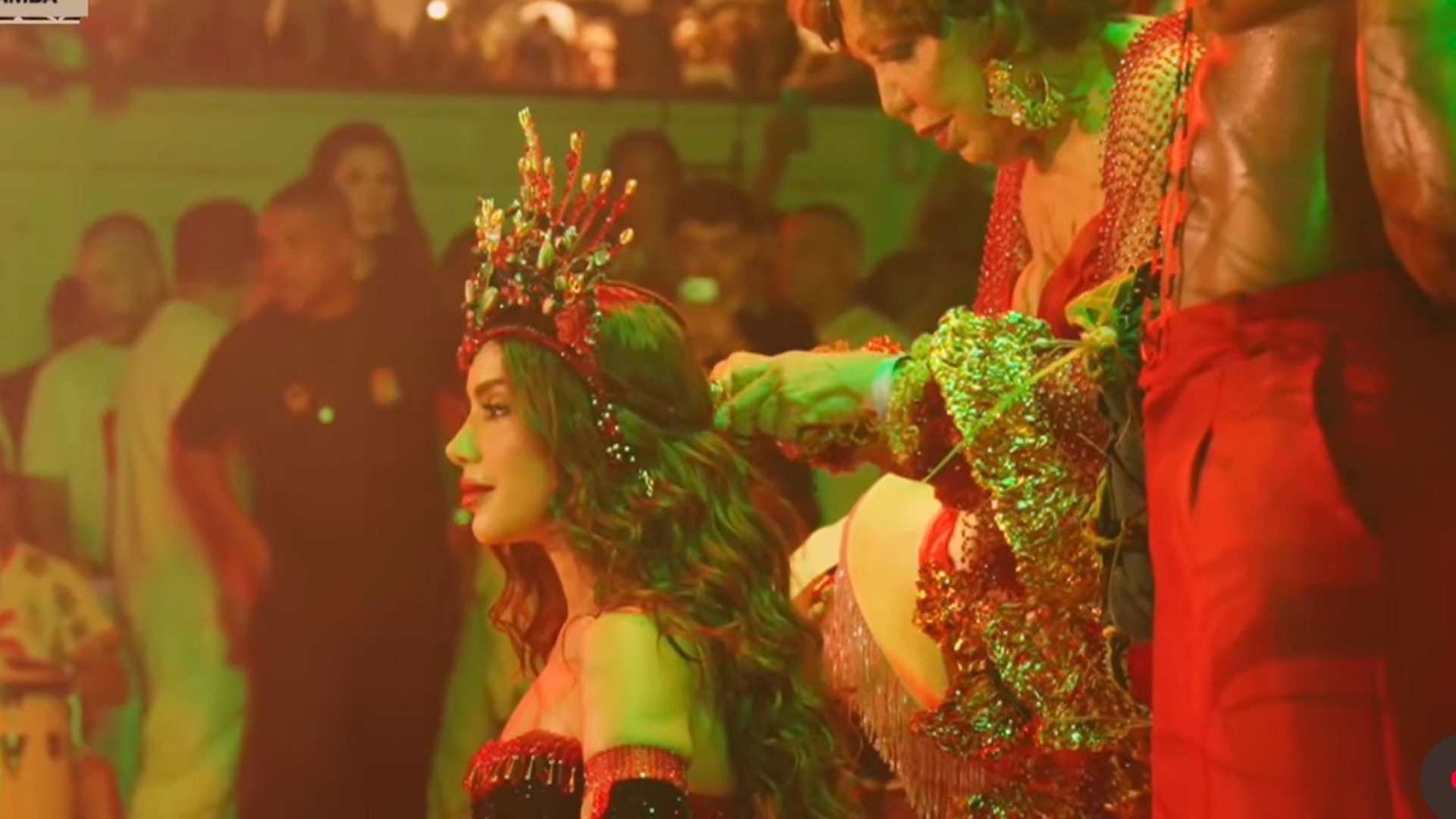
Half a century after breaking barriers on the avenue, Eloína dos Leopardos returned to the center of the party to deliver the crown of queen of Grande Rio to Anitta.
A coronation surrounded by emotion, music and representation marked the night of this Sunday, September 20, at the Acadêmicos do Grande Rio court, in Duque de Caxias, in the Baixada Fluminense.
Anitta was officially crowned the school's queen of drums for the 2027 Carnival. But the one who put the crown on the singer's head made the moment even more historic: Eloína dos Leopardos, a transvestite recognized as the first queen of drums of the Rio Carnival.
The ceremony brought together two generations separated by exactly 50 years. On one side, one of the greatest Brazilian artists of today. On the other, a woman who defied prejudice and inaugurated, in 1976, one of the most coveted posts of Carnival.
Anitta fulfills a childhood dream
At the age of 33, Anitta arrived at the court wearing a tight red dress, cut out and covered with stones. In front of the community, the singer cried, danced samba and thanked for the opportunity.
The artist said that occupying that space was a dream since childhood, but stressed that she will only remain in the position as long as she has the support of the community and the members of the drums.
The night also featured a performance inspired by the EQUILIBRIVM tour, change of costumes, dancers and appearances of celebrities. UOL, gshow.
A coronation loaded with symbolism
Instead of receiving the crown from Virginia Fonseca, who held the post at the 2026 Carnival, Anitta invited Eloína to participate in the ritual.
The presence of the pioneer was a symbolic choice. Anitta pointed out that Eloína opened doors not only for other transvestites, but also for the artistic visibility of people who, for decades, were removed from the most prominent places.
Virginia's press office stated that the influencer was available to carry out the traditional passage, but that the new queen would have requested another format. Grande Rio did not comment on this claim. Band.
Who is Eloína dos Leopardos?
Now 80 years old, Eloína has built a trajectory marked by art, courage and resistance.
Before arriving at Carnival, she worked behind the scenes of the theater as a chambermaid for great stars and then began to perform as a dancer in nightclubs. During the military dictatorship, she left Brazil and lived in Paris, where she worked as a transformist artist.
Upon returning to Rio, she participated in a Carnival contest wearing a white bikini and pheasant feathers. Her performance caught the attention of costume designer Viriato Ferreira, who spoke about her with the legendary carnival artist Joãosinho Trinta.
The night Carnival changed
In 1976, Joãosinho Trinta put Eloína ahead of the rhythmists of Beija-Flor de Nilópolis in the parade "Sonhar com Rei Dá Leão".
The post of queen of drums did not yet exist as we know it today. Eloína was positioned alone in front of the drums and transformed that place into a symbol of beauty, dance and feminine power.
Beija-Flor won the championship that year, but Eloína's identity caused huge repercussions. According to her, a good part of the public did not know that the exuberant woman who had enchanted the avenue was a transvestite.
The revelation took place the day after the parade and, in the words of the artist herself, "it was a scandal". At a time of strong police repression and prejudice against LGBTQIA+ people, her presence in that space represented an act of courage.
Eloína remained linked to Beija-Flor between 1976 and 1978, participating in the first three-time championship in the school's history. gshow, Metropolis.
The birth of Eloína "dos Leopardos"
In the 1980s, Eloína created the show Noite dos Leopardos, a production marked by sensuality and performances of naked men.
The show became a phenomenon of Rio's nightlife, remained on display for approximately a decade and helped introduce Eloína to a new generation. It was from this success that the stage name Eloína dos Leopardos was consolidated.
She also participated in productions such as Divinas Divas, a show that brought together pioneering transvestite artists on the Brazilian stage.
The triumphant return to Carnival
Decades after her historic debut, Eloína returned to the avenue. In 2025, she paraded as a highlight of Paraíso do Tuiuti in the plot dedicated to Xica Manicongo, considered the first non-indigenous transvestite documented in Brazil.
Now, in 2026, Eloína once again occupied a place of prominence by crowning Anitta. The scene did not only represent the arrival of a new queen in Grande Rio: it represented the recognition of a woman who opened doors when almost all of them were closed to people like her.
Comadres and compadres, what in 1976 was treated as a "scandal" is now recognized as history. And this story has a name: Eloína dos Leopardos.