Our Lady of Aparecida: the history of faith that crosses generations and takes Brazil to Aparecida
A small image found in the river gave rise to a devotion that spanned centuries. On this Day of Our Lady of Aparecida, Comadre presents the history of the patron saint and a tour through a Brazilian destination marked by faith, art and welcoming.
There are trips that begin long before packing your suitcase. They are born from a promise, a thank you or a story heard as a family. For many Brazilians, getting to know Aparecida, in the interior of São Paulo, has this meaning.
This Monday, October 12, Brazil celebrates Our Lady of Aparecida. For Catholics, the date is a tribute to the patron saint of the country. For those who want to learn more about Brazilian traditions, it is also an opportunity to look at a history that brings together popular religiosity, art and cultural heritage.
In the comadre.tv, the invitation is to get to know this destination with curiosity and respect: to understand how the devotion began, to observe the beauty of the Basilica and to perceive the human stories that give meaning to the pilgrimage.
A story that began in the waters of the river
The origin of the devotion dates back to 1717, in the region of Guaratinguetá, in the Paraíba Valley. According to Catholic tradition, fishermen Domingos Garcia, João Alves and Felipe Pedroso found an image of Our Lady of the Conception in the Paraíba do Sul River: first the body and, in another cast of the net, the head.
The religious account says that, after the meeting, fishing became abundant – an episode recognized by devotees as the miraculous catch. The image came to be called "Aparecida", in reference to its appearance in the waters. A12.com
The small sculpture is made of terracotta, a material made of baked clay. Her trajectory also arouses the interest of researchers: a study released by the Federal University of Espírito Santo this month addresses the transformations of the image and its relations with art, memory and belonging. Federal University of Espírito Santo
The devotion, initially cultivated in a house, gained new spaces as the number of people who wanted to be close to the image increased. This passage from the domestic environment to a large sanctuary helps to understand the dimension that Aparecida acquired in Brazilian religious life. Federal University of Espírito Santo
Patroness of Brazil: the meaning of October 12
In 1930, Pope Pius XI declared Our Lady of Aparecida Patroness of Brazil. Decades later, Law No. 6,802, of June 30, 1980, established October 12 as a national holiday dedicated to its celebration. Vatican News
The date coincides with Children's Day, but the foundation of the national holiday is the tribute to Our Lady of Aparecida.
In the calendar of families, the two celebrations can share the same day: meetings with the little ones, childhood memories and manifestations of faith. Each house finds its own way of living the occasion, according to its beliefs and traditions.
The Basilica: architecture that deserves a close look
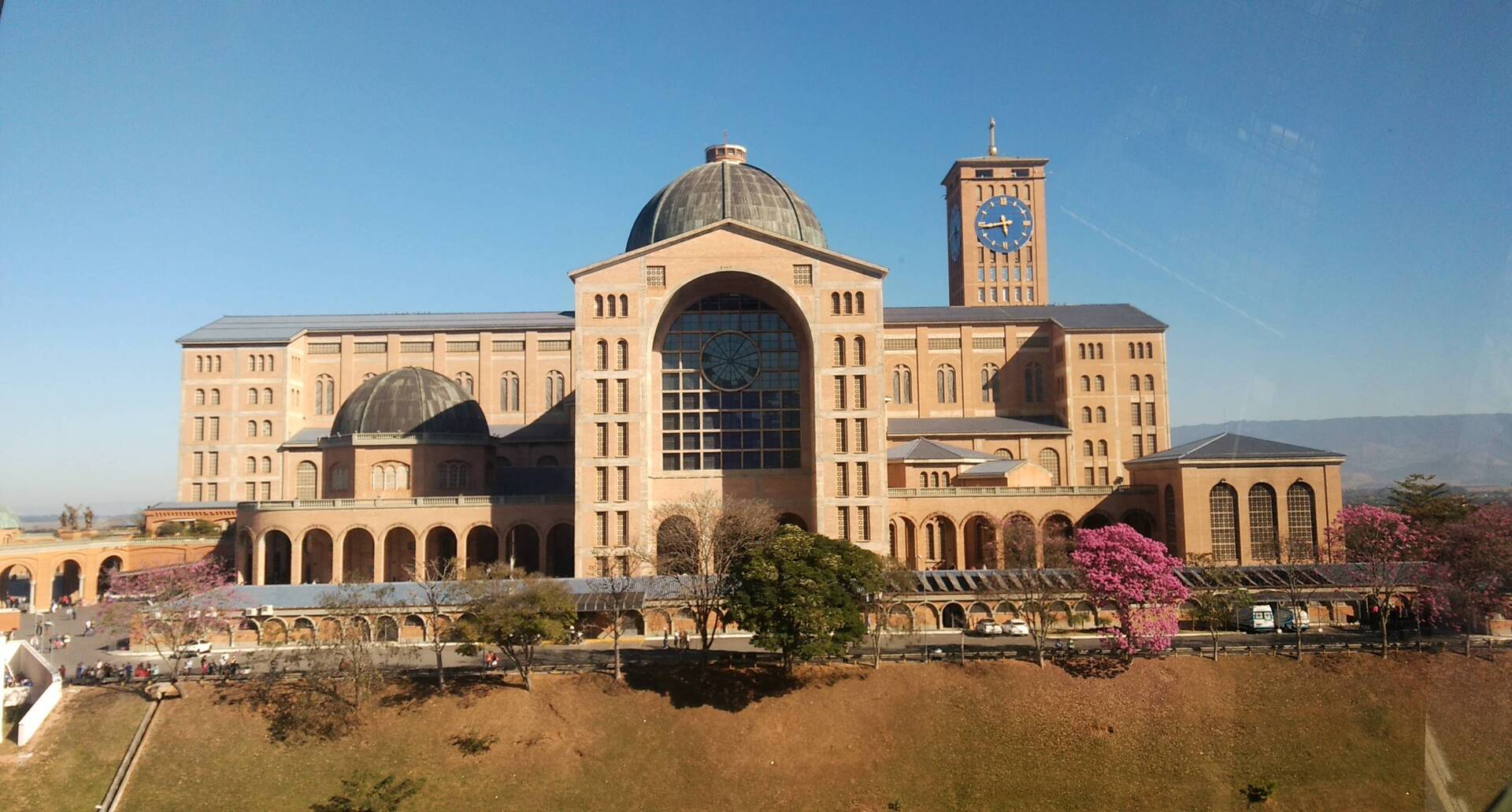
Located in the city of Aparecida, in São Paulo, the National Shrine has in the Basilica one of its main landmarks. The project was prepared by the architect Benedito Calixto de Jesus Neto, and the actual start of construction is dated November 11, 1955. a12.com
The dimensions of the building, the tower, the dome and the succession of arches invite the visitor to observe the set calmly. In the photographs that accompany this report, taken in 2017, the façade and a panoramic view from Morro do Presépio appear.
For those who like trips with history and appreciating architecture, it is worth dedicating time to the details. The visit can bring together religious contemplation and interest in the work of the artists and professionals who built the space.
On July 4, 1980, Pope John Paul II visited the Shrine and celebrated the Mass of consecration of the altar, a milestone in the history of the temple. a12.com
A walk through Aparecida: places to visit
In addition to the Basilica, other spaces help the visitor to understand the trajectory of the devotion.
The Walkway of Faith connects the National Shrine to the Historic Basilica. The route brings together two moments of this history and allows you to get to know the church that preceded the current great temple. a12.com
The Room of Promises brings together ex-votos: objects, photographs, letters and other records delivered by devotees as an expression of gratitude. It is a space in which faith is presented through personal stories and material memories. a12.com
The Nossa Senhora Aparecida Museum offers another way to get to know the historical and artistic heritage associated with the Sanctuary. For those who like to understand the places through their collections, it can enrich the tour. a12.com
Before the trip, it is worth consulting the official portal of the National Shrine to check schedules, visiting conditions and eventual tickets to the chosen spaces.
The delicacy of visiting a sacred place
Comadre, a trip is more pleasant when the itinerary respects the rhythm of those who are with you. When visiting Aparecida as a family, book breaks and avoid turning the tour into a race to get to know everything.
Comfortable shoes and weather-appropriate clothing help with walks. Inside the prayer spaces, speaking quietly, respecting the celebrations and observing the guidelines on photographs are gestures of consideration for those who are living an important moment.
The same care goes for the records: before photographing other people up close, especially in prayer or emotional, ask for permission. There are memories that deserve to be kept discreetly.
Faith, memory and respect between generations
The story of Aparecida can reach a family in many ways: on a trip with grandparents, in an image kept at home or in a report of gratitude.
For the devotees, these bonds have spiritual meaning. For visitors of other faiths, getting to know the tradition can be a cultural experience and an opportunity to listen.
On this October 12, the comadre.tv dedicates its gaze to this encounter between history, faith and everyday life. The grandeur of the Basilica draws attention, but it is also the memories carried by each visitor that make Aparecida a special place.
And you, comadre or compadre: have you ever met Aparecida? What memory do you keep from this trip?